

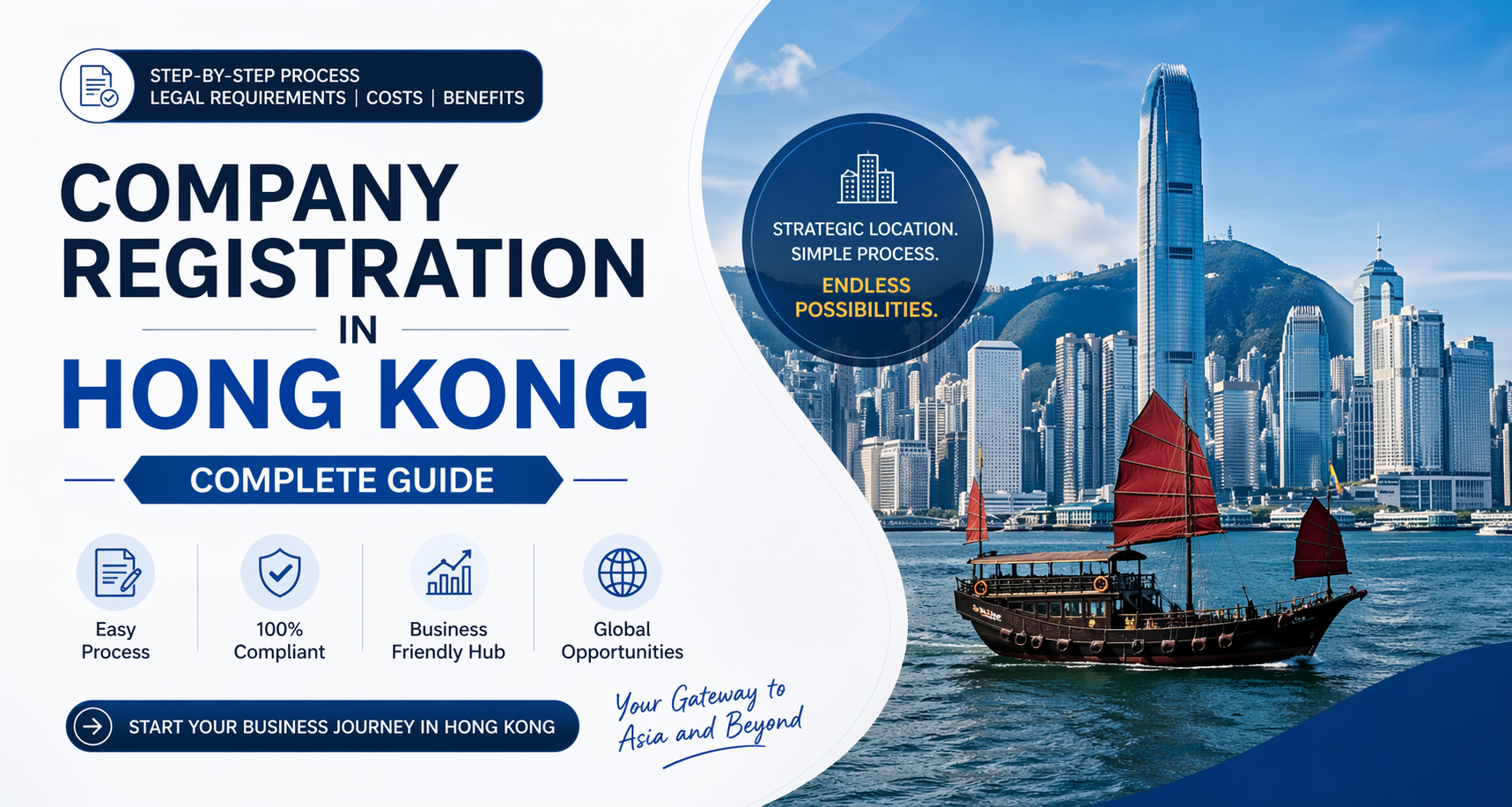
01 Apr Your Gateway to Asia: The Complete Guide to Company Registration in Hong Kong (2026 Edition)
In the rapidly evolving global economy of 2026, Hong Kong remains an undisputed titan for business expansion. Whether you are a tech founder looking to leverage the city’s booming AI and biotech ecosystem or a small business owner seeking a tax-efficient home for your e-commerce brand, Hong Kong offers a unique “dual gateway” advantage. With a record-breaking 1.56 million registered companies as of early 2026, the city’s allure is rooted in its robust common law system, 100% foreign ownership policy, and a tax regime that remains one of the most competitive in the world. This guide will walk you through everything you need to know to successfully plant your flag in Asia’s premier financial hub.
Why Hong Kong? The Strategic Advantage for Tech and SMEs
Hong Kong isn’t just a city; it’s a strategic launchpad. For tech enthusiasts and small business owners, the benefits of Hong Kong company registration are multi-faceted:
- Unrivaled Tax Efficiency: Hong Kong employs a two-tiered profits tax system. The first HKD 2 million in profits is taxed at just 25%, with the remainder at 16.5%. There is no capital gains tax, no VAT/GST, and no withholding tax on dividends.
- 100% Foreign Ownership: Unlike many jurisdictions, you don’t need a local partner. You can own 100% of your company and act as the sole director, regardless of your nationality.
- Startup Ecosystem: With over 5,000 startups currently operating in the city, the networking opportunities in sectors like fintech and green energy are unparalleled.
- Ease of Banking: Despite global tightening, Hong Kong’s fintech-friendly environment has made opening business accounts more accessible through digital-first banks and traditional institutions alike.
Step-by-Step Process: From Concept to Incorporation
The registration process in 2026 is streamlined and can often be completed entirely online in as little as 2 to 5 business days.
- Choose Your Business Structure
Most international entrepreneurs opt for a Private Company Limited by Shares. This structure protects your personal assets and is highly regarded by investors and banks.
- Name Approval
Your company name must be unique. It can be in English, Chinese, or both. You can perform a free search through the Hong Kong Companies Registry to ensure your desired name isn’t already taken.
- Appoint Key Personnel
To register, you must appoint:
- At least one Director: An individual of any nationality (must be 18+).
- At least one Shareholder: Can be an individual or a corporation.
- A Company Secretary: This must be a Hong Kong resident or a licensed Hong Kong company. This is where professional services like Tokyo Consulting Firm become essential to ensure you stay compliant with local laws.
- Registered Office Address
Every company must have a physical address in Hong Kong (P.O. Boxes are not allowed). Many startups use a virtual office service to satisfy this requirement while keeping overhead low.
Compliance and Maintenance: What Happens After Setup?
Registration is just the first step. To keep your company in good standing, you must adhere to annual compliance requirements:
- Annual Return (NAR1): Filed once a year with the Companies Registry.
- Business Registration Renewal: Typically renewed every 1 or 3 years with the Inland Revenue Department (IRD).
- Audited Financial Statements: Even small private companies must have their accounts audited by a Hong Kong Certified Public Accountant (CPA).
- Profits Tax Return (PTR): Usually issued 18 months after incorporation for new companies.
Pro Tip: Managing these deadlines can be a headache for remote founders. Utilizing a free trial or consultation with a professional firm can help you map out your compliance calendar without the initial stress.
Costs of Incorporation in 2026
While costs can vary, a typical setup involves:
- Government Fees: Approximately HKD 3,745 (covering the incorporation fee and the 1-year Business Registration certificate).
- Professional Fees: Includes the company secretary, registered address, and document preparation.
- Total Estimated Initial Budget: Most entrepreneurs should budget between HKD 8,000 and HKD 12,000 for a full-service setup including the first year of compliance.
Conclusion: Ready to Scale Your Business?
Registering a company in Hong Kong is more than a legal formality; it is a signal to the world that your business is ready for global competition. With its low tax rates, proximity to Mainland China, and ease of setup, it remains the gold standard for entrepreneurs in 2026.
Don’t let the paperwork slow down your innovation. Whether you’re building the next great AI tool or expanding your trade network, getting the right support is crucial. Explore how Tokyo Consulting Firm can simplify your journey and handle the heavy lifting of Hong Kong registration and compliance.
Have a question about the process? Drop a comment below or contact us for a free consultation!
FAQ: Common Questions on HK Registration
- Do I need to fly to Hong Kong to register my company?
Ans. No. In 2026, the entire incorporation process can be handled remotely through digital filings. You only need to provide digital copies of your passport and proof of address.
- Can a tech startup get government funding after registration?
Ans. Yes. Registered Hong Kong companies can apply for various government grants, such as the Technology Voucher Programme (TVP) or funding from Cyberport and HKSTP, provided they meet the specific criteria for innovation.
- What is the minimum share capital required?
Ans. There is no statutory minimum. Most companies start with a nominal share capital of HKD 1.00 or HKD 10,000.
No Comments